





Gold Rush With Johnny Cash Slot In Denmark
Get a practical overview of Gold Rush With Johnny Cash in Denmark: how to play, manage your budget, and keep it 18+.
How To Understand Gold Rush With Johnny Cash RTP
RTP (return to player percentage) is often treated as a definitive answer, but in reality, it's an average over many spins. What you experience in a short session is variance: periods of small wins, periods of nothing, and a few moments when the game suddenly "opens up".
Imagine you sit down with a small evening budget, expecting quick feedback. You hit a couple of small payouts and feel like increasing your bet because it "feels good". Many players do just that - and test the game too expensively before understanding its rhythm.
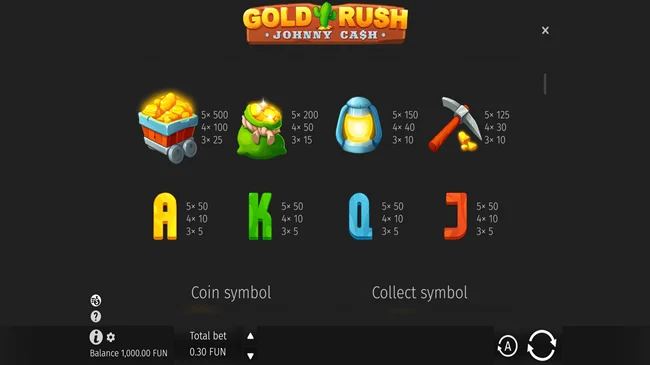
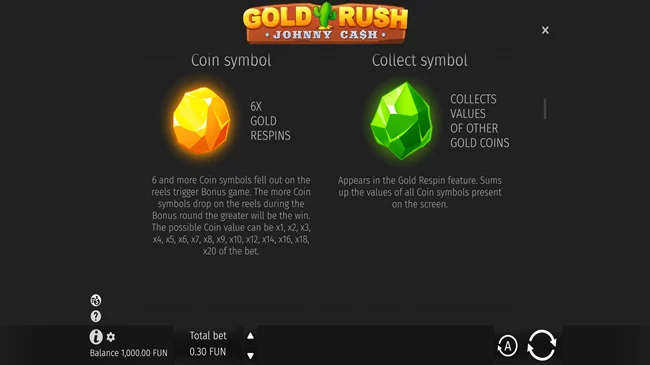
Make the test simple: start low, keep your stake stable for a period, play at a calm pace, and use game info to understand lines, symbols, and bonus features. If the information is unclear in the version you're playing, keep the stake down and play shorter sessions until it makes sense. RTP doesn't say if you'll win today - it says something about the design over time.
Honest Gold Rush With Johnny Cash Reviews And Impressions
Good reviews describe choices and actions, not just a mood. Look for impressions where the testing method is clear: how long was played, whether the stake was stable, and which features actually change the experience.
If you want to evaluate the game yourself, do it as a mini-investigation. Imagine you're considering playing for real money but want to avoid jumping in with emotions first. Read a few different impressions, note common patterns, and then try the game briefly at your own pace.
When reading reviews, filter out anything that promises guaranteed wins. In Denmark, it makes more sense to choose based on comprehensibility and your own control - not hype.
Get Started With The Game In Denmark In 2026
A good start is a routine, not a button. In Denmark, access and features may vary depending on the provider's setup and applicable rules, so think in terms of habits that work regardless of the platform: 18+, fixed limits, and a pace you can control.
Imagine opening the game on your phone "just for a minute". Suddenly, it's 20 minutes. Many avoid this slippery slope by starting with a clear goal: entertainment within a defined time frame - and then stop.
Registration And First Setup
When you create an account, think ahead: logging in should be easy but secure. Use an email you always have access to, choose a password you don't reuse, and double-check contact information. It saves trouble later, especially if you need help or have to confirm something.
Imagine you want to log in a week later and can't find the correct email. Typically, it ends in a long recovery process. Therefore, set things up from the start, and enable limits or breaks immediately if they are available.
Choose Bet Level And Game Pace
The bet determines how expensive it is to learn the game. Start low, play steadily, and agree with yourself when you can change something (for example, after a certain number of spins). A calm pace makes it easier to stop, and it makes it clearer when you start chasing.
Imagine taking a short break, looking at your balance, and asking: “Am I following my plan?” That small check-in can save the rest of the evening. Turn off auto-play if it makes you lose track.
Test In Practice Mode Without Pressure
Use a short test to learn the features: symbol payouts, bonus triggers, and what elements create pace. Note down what you actually see, instead of guessing.
Imagine two tests: one where you click quickly, and one where you stop after 10-15 spins and assess if you are still calm. Many find that the slow test reveals more. Create a stop rule: “When the test time is over, I will close it.”
Stop Button, Breaks And Self-Exclusion
Responsible gaming means using tools: time limits, breaks, and the option to self-exclude if you lose control. If you start playing to “recover” losses, stop and take a real break.
Imagine walking away from the screen for five minutes. It breaks the pattern and makes it easier to make calm choices afterward. Feel free to set a timeout before the first spin, so the plan doesn't have to be negotiated in the middle of the game.
Deposits And Stress-Free Budget Management
Depositing should be the most boring step in the entire process. Choose a method you understand, read the confirmation, and stick to an amount you have decided in advance. Processing and terms may vary depending on the method and provider, so expect variation and keep an eye on the details.
Imagine you've just had a fun streak and think “I can just put a little more in”. That's often where the budget runs wild. A calm player does the opposite: one deposit, one plan, and then stop.
Choose Payment Method And Keep Track Of Details
Choose a solution that fits your daily life and makes it easy to stop. Check amounts and extra steps before confirming. Avoid depositing while multitasking – most errors come from distraction.
Imagine being interrupted and clicking through without reading. Stop, read, confirm - in that order. Write your plan down in one sentence, so it's hard to twist.
Set Limits Before You Press Confirm
Limits work best when they are set before emotions take over. Use deposit, loss, and time limits, if available, or create your own with a timer and a stop rule.
Imagine you are playing late and becoming more impulsive. A 30-minute timer makes it easy to stop without arguing with yourself.
|
Steps Before Playing |
What You Check |
Why It Helps |
|
Fixed Budget |
Amount you can spare |
Reduces impulsive choices |
|
Timeframe |
Start and stop time |
Provides a clear ending |
|
Bet Level |
Low and stable |
Creates calm and overview |
|
Break Plan |
Short break along the way |
Breaks chasing behavior |
|
Contact Method |
Where you get help |
Faster solution to problems |
Mini-Plan For A Short Session
A mini-plan is simple: low bet, fixed time, no changes along the way. If you hit a good streak, take a break instead of increasing your bet – that's often where control slips.
Imagine putting your phone down for two minutes and checking in with yourself. Are you calm, or do you feel like chasing? End with an honest question: was it entertainment or chasing? If it was chasing, make the next session shorter - or take a longer break.
Withdrawals, Verification, And Help When You Get Stuck
Withdrawals become easier when your information is in order. Expect there may be verification steps, and that processing may vary by method and internal routines. It's a reason to be prepared, not a promise of speed.
Imagine you want to withdraw and realize you lack access to the email you registered with. It's annoying, but easy to prevent if you tidy up your information on a calm day.
KYC And Documents: What Is Typically Required
Identity verification often involves ensuring that the account and payment method match you. Have a valid ID, proof of address, and clear photos in good light ready. The better the quality, the fewer rounds back and forth.
Imagine sending a blurry photo and being told to resend it. Many hours of waiting can result from five minutes of carelessness. Also, check if you need to confirm your phone or email - small steps can block a big process.
Withdrawal Flow Step By Step
Keep it simple: choose method, enter amount, read everything, confirm. Save any receipt details so you can explain the situation if something goes wrong. Don't constantly change methods if you want to avoid extra questions.
Imagine you switch methods overnight and then wonder why it takes longer. Consistency often makes the process more manageable.
Support Channels And What To Write
The fastest help starts with a good message: what you did, what happened, where it stopped, and whether you are on mobile or computer. Write briefly but precisely, and stick to the facts.
Imagine you write “it doesn't work” and get three questions back. A specific message saves time: “I cannot confirm the withdrawal, the error occurs after step 2.”
Troubleshooting On Mobile And Browser
Many problems are technical: restart, close the tab, check the connection, and use an updated browser. On mobile, power-saving mode and notifications can also affect stability.
Imagine the game is lagging, you get annoyed and click faster. Stop, fix the technical issue, and only continue when you have calm and control again. If something feels unclear, do not deposit more before you have received an answer.

Responsible Gaming For Adults In Denmark
The game is only for adults (18+), and responsible habits make the experience calmer. Ask yourself before you start: am I playing for entertainment, or to change a mood? If it's about mood, then a break is often a better choice.
Imagine you've had a tough day and open the game to relax. That can be fine - but only if you can also close it again when your plan says stop.
Timeout, Self-Exclusion And Breaks That Work
Timeout and self-exclusion are tools, not shame. Use timeout if you feel urgency or irritation, and choose longer exclusion if you repeatedly exceed your own limits. A break works best when it's concrete: get up, walk away from the screen, and change rooms.
Imagine you sit somewhere else and only return when your body has calmed down. It breaks a spiral before it grows. In 2026, the best strategy is about routines that protect your time and your budget - every time.
FAQ
How do I find the game's payout information without guessing?
Start in the game's info or help section, where rules and symbol payouts are usually located. Read it before playing for a longer time, and use a short test session with the same stake and a calm pace, so you don't build expectations on a few random spins. If the information is unclear, treat it as a sign to keep your stake low and stop early. Imagine that after the test, you write down three lines: what happened often, what happened rarely, and when did you feel like changing the plan? That small log makes your decisions more sober.
What is a good first stake level for new players?
A good starting point is a low and stable level where you can play for a limited time without pressure. The goal is to learn the rhythm, not to “test luck.” Set a timer, keep the stake consistent, and decide in advance that you won't adjust mid-game. If you feel like increasing it, slow down and take a short break instead. Good habits are often formed at the beginning.
Why do some evenings feel dry even if the game seems fair?
Randomness can lead to long periods without anything special, especially in short sessions. This doesn't necessarily mean something is wrong - it means the experience can vary greatly from day to day. Imagine that after 10 minutes you want to “just win it back.” That's a signal to stop, not to continue. Stick to the stop rule, and evaluate the game over several small tests instead of one long evening.
Which limits provide the most control in everyday life?
Time limits are often the easiest to follow because they don't require you to “feel” the right time. Combine a timer with a fixed stop rule: when the time is up, you close it - even if things are going well. Deposit limits can also help, as the budget becomes concrete. A short break halfway through, where you ask “am I playing calmly or am I chasing?”, makes control even stronger.
What do I do if a withdrawal is stalled or requires extra steps?
Gather the facts first: time, method, confirmations, and where the process stopped. Check that you have access to email and phone, then write to support with a brief, precise step-by-step description. Imagine you're explaining it like a recipe: step 1 went fine, step 2 gave an error, step 3 I can't reach. Avoid depositing more to “test” before you have clarity.
How do I write to support to get help faster?
Write so that someone else can understand and reproduce the problem: what you did, what happened, and if it repeats. Mention if you are on mobile or computer, and if you used an app or browser. Keep the message short but concrete, and avoid sending many small messages - one good message often saves several rounds of back and forth.
When do timeout or self-exclusion make sense?
When you exceed your own limits, become irritable, or play to recover losses, it's time for a break function. Timeout can provide calm quickly, while longer exclusion is suitable if the pattern repeats. Imagine you shut down, go for a walk, and feel how much easier it is to think clearly when the game isn't tempting you. It's about protecting your time, your mood, and your finances, so entertainment doesn't become a problem.